

Rakeback in Crypto Gambling: What It Is and How It's Calculated
The history of rakeback reveals how cryptocurrency casinos reinvented fee structures that had been standard in traditional poker rooms for decades. Understanding this evolution clarifies both the mechanics and the incentives at work.
Filed 29 May 2026 · 3 min read
The concept of rakeback emerged from poker's long history of house extractions. When casinos began taking 5 percent of every pot for themselves, grinders who played thousands of hands needed some mechanism to recover those losses. By the 1990s, traditional room operators began offering returns to their highest-volume players. It was a simple economy: retain your best customers by giving them a small percentage back.
Cryptocurrency gambling platforms inherited this tradition but transformed it entirely. Where traditional casinos limited rakeback to VIP players, crypto rooms democratized it. Every player could access returns on their losses, regardless of stake size. This shift reflected both the technology's transparency and the platforms' need to differentiate themselves in a crowded market.
The early iterations appeared around 2014, as the first truly decentralized betting platforms began accepting Bitcoin. Sites like BitDice and Seals with Clubs offered modest returns, typically 0.1 to 0.5 percent of house earnings. The calculation was straightforward: multiply the pot's total rake by the rebate percentage, then distribute proportionally to players who contributed hands.
How Modern Calculation Works
Today's rakeback operates on predictable mechanics. A crypto casino collects rake from each hand played. That rake gets pooled daily or weekly. The platform then calculates the player's share based on their contribution to that rake over the period.
Consider an example: a poker room generates $100,000 in weekly rake. They offer 10 percent rakeback. Players are entitled to $10,000 in returns. If Player A generated $5,000 of that rake through their hands played, they receive $500. The software traces this automatically through smart contracts on Ethereum or other chains.
The transparency of blockchain allows players to verify their rakeback calculations in real time, a feature traditional casinos cannot offer without significant operational overhead.
Smaller platforms often structure rakeback differently. Some offer a fixed percentage per hand, regardless of table stake. A $0.50 rake-per-hand game might return $0.02 to every player who plays the hand. This removes the calculation problem entirely and appeals to recreational players.
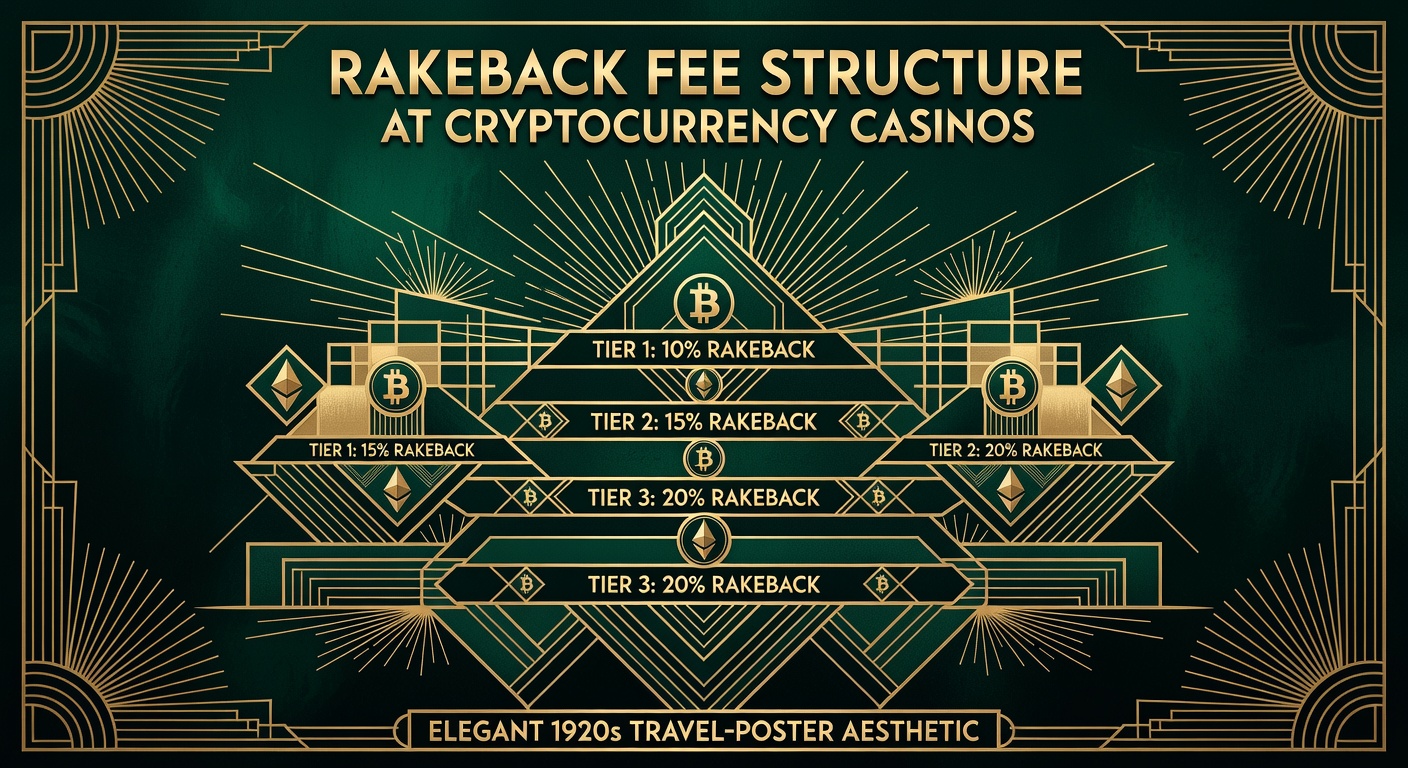
Higher-tier programs layer complexity. Stake Elite, for instance, introduced tiered rakeback in 2019: silver members received 10 percent, gold members 15 percent, and platinum members 25 percent. To maintain these tiers, players needed to generate $10,000, $50,000, and $250,000 in rake annually respectively. This structure aligned incentives; players who contributed more to the ecosystem received correspondingly larger returns.
The Cost Question
Crypto platforms justify rakeback through reduced overhead costs. Without physical buildings, licensing fees in multiple jurisdictions, or floor staff, these operators run leaner than Caesars or DraftKings. They can afford to return 15 percent to players where traditional rooms return 5 percent, and still maintain healthy margins.
Yet this advantage narrows yearly. As regulators expanded into crypto gambling throughout 2017 and beyond, licensing costs grew. Platforms seeking MGA licenses in Malta or UKGC approval in Britain faced fees approaching $100,000 annually. These expenses pushed some operators back toward lower rakeback rates.
Calculating rakeback remains one of cryptocurrency's clearest value propositions to casual gamblers. The distributed ledger creates an audit trail. A player can verify their returns in minutes through a block explorer, checking that funds arrived correctly. In traditional casinos, you must trust the cage operator's records.
This transparency arrived at an interesting moment: just as traditional poker rooms were facing pressure to publish their rake percentages and share more information about house extractions. Crypto platforms did not invent rakeback, but they democratized it and made it verifiable. For anyone considering online poker, understanding rakeback's mechanics helps clarify what you are actually paying for, whether you play at PokerStars, DraftKings, or Stake.
Filed under: Bonuses, Crypto Gambling, Guides, History, Poker