

The Psychology Behind Why Players Deviate From Optimal Strategy
Okay, so you know basic strategy, right?
Filed 23 April 2026 · 2 min read
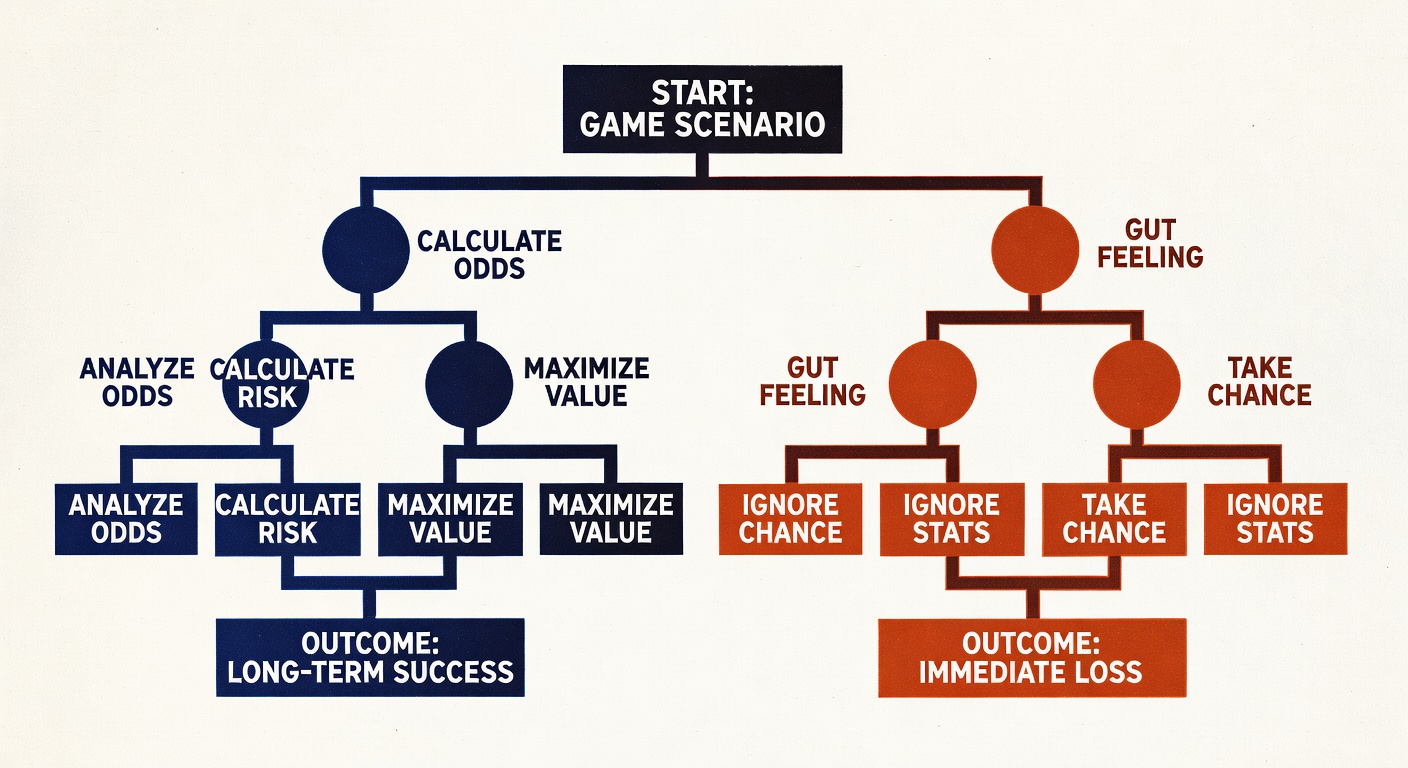
Okay, so you know basic strategy, right? The mathematically optimal way to play blackjack or whatever. You've memorized the chart. You know when to hit, when to stand, when to double, when to split. You know what the math says. So why don't you do it?
Emotions During Play
Here's the thing. You're sitting there with a twelve. The dealer shows a six. Basic strategy says hit. But you've got this feeling, you know, that the next card's a face card. You can feel it. So you stand. And guess what? Sometimes the next card is a face card and you feel like a genius. Mostly though, you get a seven or an eight and you lose. But that one time you were right reinforces the bad decision.
The Sunk Cost Trap
You've got twenty dollars in this shoe already and you're down. Now you're more willing to take stupid hits or weird doubles because you're trying to get back to even. That's not how math works but that's how brains work. Sunk cost. Water under the bridge. The twenty dollars you already lost has nothing to do with what the next hand should be, but you don't play like that. You play like you need to make it back right now.
Variance Feels Like Injustice
You follow basic strategy perfectly for two hours and you're down. The math says this happens. Variance. Sometimes you lose even when you're playing correctly. Does this feel fair? No. It feels like the game is rigged. So you start deviating thinking that if you adjust your strategy, the luck will change. You know that's not true logically, but feeling that it's true is so strong that it overrides the logic.
Social Pressure
The guy next to you never hits on sixteen. He's been winning. So maybe hitting on sixteen is wrong? Everyone at the table is making different plays and some of them are winning and you're not. So you mirror what they're doing. This is not optimal play. This is tribal.
The Overconfidence Effect
After a few wins you start thinking maybe the basic strategy is too conservative. Maybe you're better than average. Maybe you see patterns the algorithm doesn't. This is false. But it feels true when you're running hot. So you deviate from optimal play because you think you're playing a better version of optimal play.
This happens in poker too. You make a good bluff. Now you're bluffing more often. You got lucky once and now you think the skill was higher than it was.
Fatigue
You've been playing for six hours. Your brain is tired. Your willpower is depleted. That chart in your head becomes harder to follow. You start guessing. You start intuiting. You start playing worse because your cognitive resources are exhausted. That's when the big losses happen.
The Fix
Honestly, you can't fix this entirely because you're human. But you can recognize it's happening. When you feel like deviating from strategy, ask yourself why. Is it math or is it emotion? If it's emotion, don't do it. Set a time limit before you start. Walk away when tired. Don't let sunk costs influence current decisions.