

How to Create a Strong Password for Your Casino Account
The maitre d at the Desert Inn used to remember faces. Nowadays, casinos remember passwords. Here's how to make sure yours is worth remembering.
Filed 28 April 2026 · 3 min read
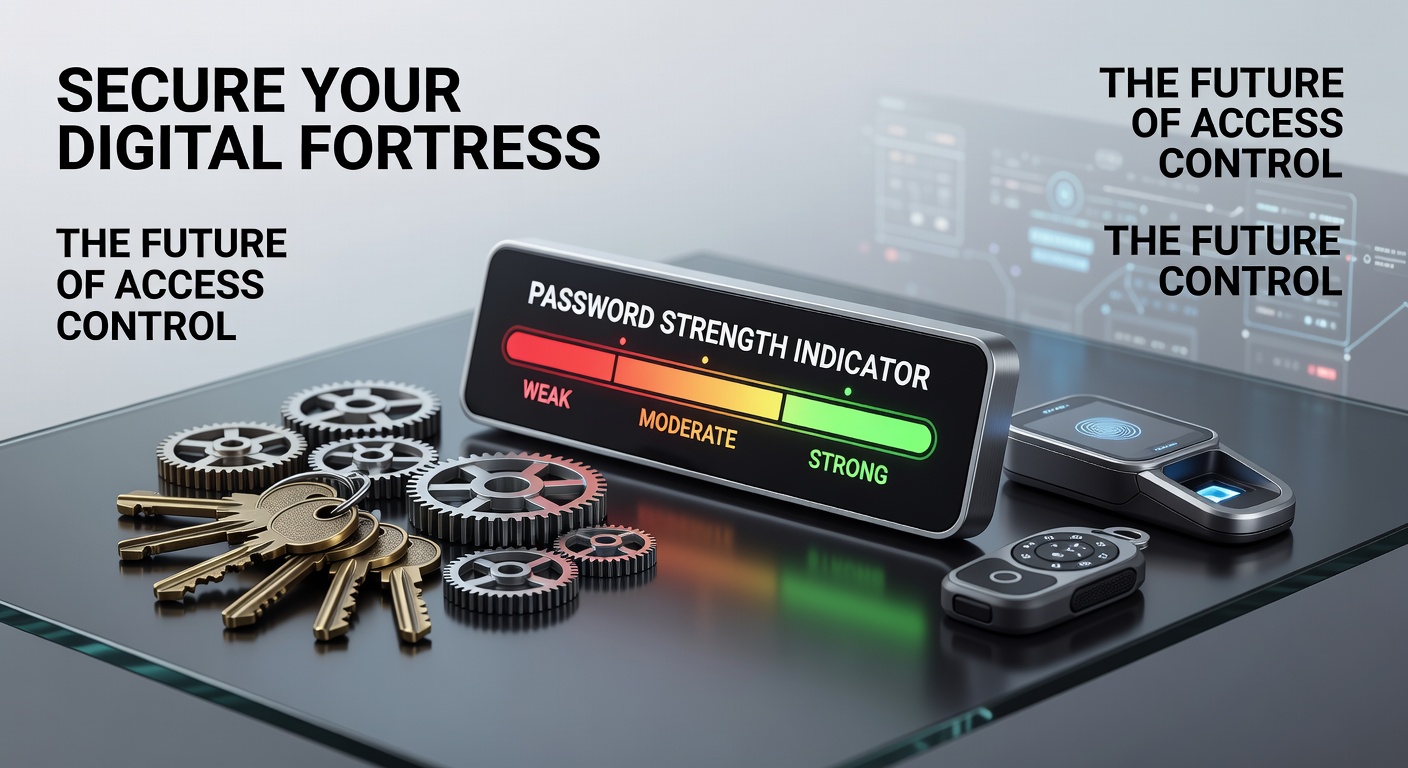
A password is your first line of defense against people with worse intentions than yours. Not everyone playing online respects the house rules. Some don't respect the house at all.
The simplest passwords fail fastest. A birthday. A spouse's name. The word "password" itself. These will not protect what matters: your bankroll, your identity, your ability to negotiate with casino customer service at 2 a.m.
Here's what separates passwords that merely exist from passwords that actually work.
The Architecture of a Strong Password
Length comes before complexity. A twelve-character password made of random nonsense beats an eight-character password built from a coherent phrase, even if the short one looks fancier. Fourteen characters is better. Sixteen is the baseline for real money casinos. The math is not subtle: each additional character doubles the computational effort required to crack it.
Password crackers work through brute force or dictionary attacks. Brute force tries every possible combination; dictionary attacks guess phrases, names, and common substitutions. You want to frustrate both simultaneously.
This means combining character types. Uppercase. Lowercase. Numbers. Symbols. Not as window dressing. As functional variety. A password like "Penguin4921" has uppercase and numbers but fails dictionary attack resistance: "penguin" is a word. "P3ng%!n4921Km" does the work. It has no words. It has no predictable patterns. It looks like noise. That is the point.
Avoid substitutions that crackers already know. The @ symbol replacing an A. The 1 replacing an I. These are the first things sophisticated password crackers try. Worse, they make the password harder for you to remember without making it harder for machines to guess. Go weird or go home.
The Practical Reality
Memory fails. Writing passwords down fails harder. The correct approach involves a password manager: software that generates, stores, and enters complex passwords for you. KeePass. Bitwarden. 1Password. These are not luxury items. They are basic infrastructure.
A password manager lets you create a 20-character string of pure entropy for each casino account without carrying the burden of memorization. The manager protects this vault with a single strong master password that you actually need to remember. This is trade-down you can live with.
If a password manager feels like overkill, you are not taking security seriously enough. Consider that a casino account holds money. Money is what people steal. The inconvenience of copy-paste security beats the certainty of a compromised account.
The Casino Account Specifically
Online casinos often limit password length to 16 or 20 characters for legacy reasons. This is infuriating but survivable. Within those constraints, the same principles hold: mixed case, numbers, symbols, no words, no patterns.
Some casinos have mandatory password resets every 90 days. This is security theater when the password was strong to begin with, but it is the rule. Plan for it. Do not cycle through predictable variants ("Password1", "Password2"). Generate a new random string each time.
Two-factor authentication makes a weak password slightly less catastrophic. But do not rely on that excuse. A breached password plus a successful SIM swap attack is still a breach. The password should be good enough to require neither apology nor faith in secondary measures.
The cynical reality: most casual players lose because of their play, not because their account was stolen. But the people who win know their money is a target. They act accordingly. The password that protects a bankroll worth protecting is not the one you invent in thirty seconds. It is the one your password manager generated while you were thinking about something else.