

Do Slot Machines Have Hot and Cold Streaks? The Truth About RNG
The belief in hot and cold slot machines is historically recent. Before slot machines became electronic, this belief did not exist. Now that they are electronic, it is more false than ever.
Filed 22 May 2026 · 4 min read
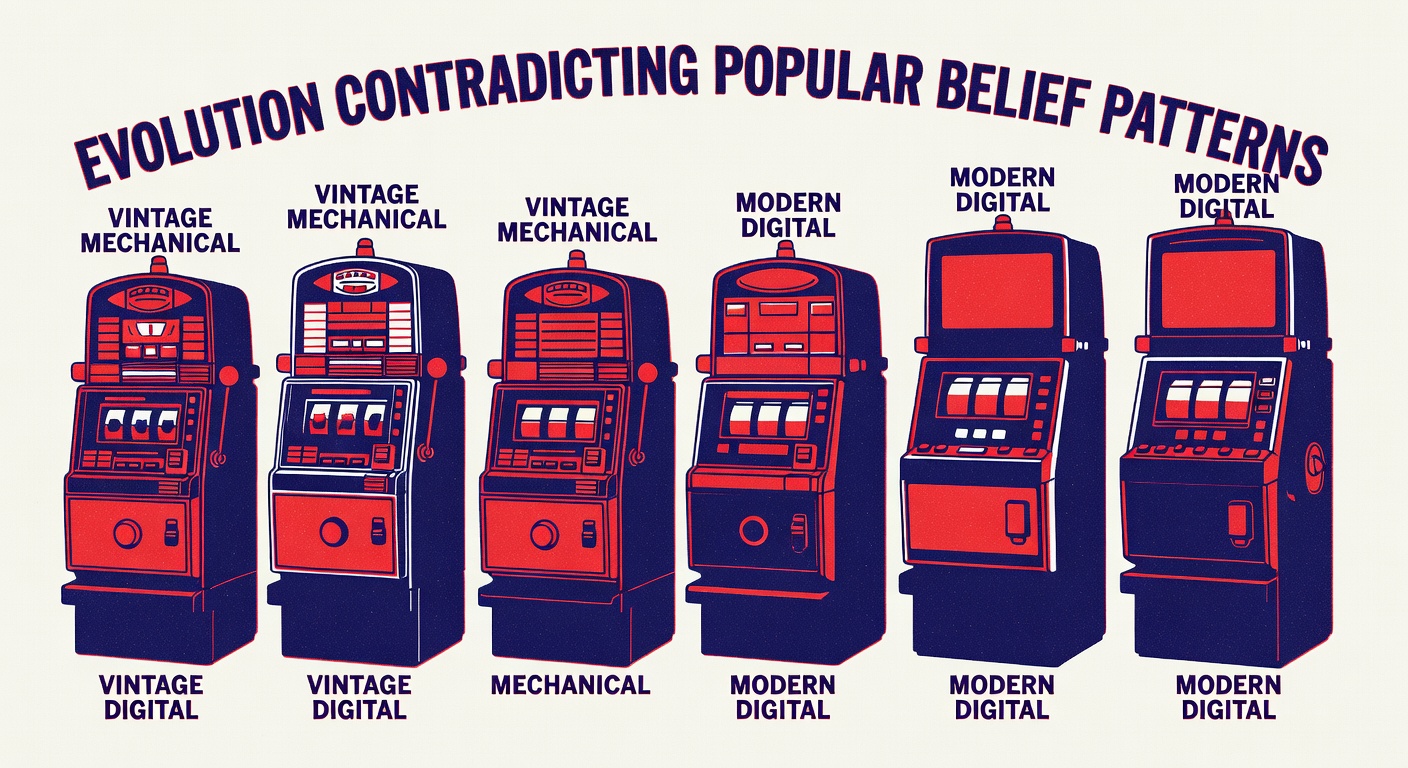
Mechanical slot machines emerged in San Francisco in 1895. The Liberty Bell, produced by Charles Fey, had three reels and a simple mechanical payout. The concept was straightforward: spin the reels, the wheels stop, if certain symbols align, you win.
These machines did have bias. A mechanical wheel can wear unevenly. A particular symbol might rub against the mechanism differently than others, catching slightly more often. Players discovered this through observation. Over months of play at the same machine, they would notice that a particular symbol appeared more frequently. They would return to that machine, having identified what they believed was an exploit.
In the 1950s and 1960s, as machines became more prevalent in casinos, the observation of mechanical bias became more systematic. Players wrote down results. They tracked which machines were paying more frequently. They claimed certain machines were "hot" (paying more than expected) while others were "cold" (paying less).
For mechanical machines, this had some basis in reality. A worn machine does develop bias. However, the bias is random. A machine that is hot today might be cold tomorrow if a coin jams and damages a spring. The causality the players were assuming (this machine owes me money, therefore it will pay me) did not exist. The machine was not keeping track. It was not angry at you. It was just worn.
When electronic slot machines replaced mechanical ones in the 1970s, something fundamental changed. An electronic machine does not wear in the way a mechanical machine wears. It uses a random number generator to determine outcomes. Each spin is independent. The machine has no memory. The concept of "hot" and "cold" became technically impossible.
Yet players continued to talk about hot and cold machines. The belief persisted even as the underlying mechanism changed completely. This is because the belief filled a psychological need. Gambling involves chance. Humans are desperate to believe that chance is not purely random, that there are patterns, that you can gain an edge through observation.
The Nevada Case
In the 1980s, Nevada regulators began documenting player complaints about hot and cold machines. They received reports from players claiming that particular machines were set to hot or cold. The players demanded that casinos be required to disclose which machines were "due for a payout."
The Nevada Gaming Commission investigated and found no evidence that machines could be hot or cold in any meaningful sense. The RNG generates outcomes uniformly distributed. A machine that hits lucky for an hour will hit unlucky the next hour. This is variance, not hotness.
They issued guidance stating: slot machines are games of chance. Each spin is independent. Past results do not predict future results. This is mathematically certain. Casinos took this guidance and published it in gaming regulations.
Yet the belief in hot and cold machines persisted. In the 1990s, roughly 40 percent of casual slot players believed that machines had cycles. They believed that a machine that had not paid in days was "due." This is a form of gambler's fallacy, the statistical illusion that random events even out.
Online casinos emerged in the mid-1990s and this gave researchers an opportunity. For the first time, they had access to massive datasets of slot machine results. Millions of spins recorded digitally. They could test whether any pattern existed.
The results were unambiguous. No pattern exists. A slot machine that paid $10,000 in the previous hour is no more or less likely to pay $10,000 in the next hour than any other slot machine. Variance causes short-term clustering of wins and losses. Over longer periods, the house edge exerts itself and players lose money at the expected rate.
But this finding did not change player behavior. People continued to believe in hot and cold machines. They continued to play machines that had recently hit large jackpots, assuming the machine was hot. They avoided machines that had not paid in weeks, assuming those were cold.
The belief in hot and cold slot machines is evidence that human pattern recognition is stronger than human capacity for statistical reasoning.
In 2010, a group of researchers from UNLV tracked video of casino players over 200 hours. They recorded which machines people chose to play. Players selected machines that had recently paid winners at significantly higher rates than random selection would predict. This was not conscious strategy. It was unconscious bias.
When interviewed, many players could not articulate why they chose the machines they chose. They had just felt drawn to them. The feeling was generated by recent visible payouts, which the players unconsciously interpreted as a signal of future payouts.
Modern slot machines with advanced RNGs and frequent payouts (penny slots paying multiple small wins per spin) amplified this problem. A penny slot that hits three cherries, then two bars, then a wild, then another cherry creates the appearance of frequent winning. The player feels like they are winning more often. Mathematically, the house edge is identical. Psychologically, the player is more engaged.
So the modern history of hot and cold machines is the history of a belief that emerged from real phenomenon (mechanical wear), persisted through the transition to technology where it became false (electronic RNG), and was amplified by modern slot machine design that deliberately creates the appearance of frequent winning.
The machines are neither hot nor cold. They are optimized to make you believe they might be.