

The Psychology Behind Why Players Deviate From Optimal Strategy
Players know the correct play. They deviate anyway. This is not stupidity. It is psychology. Understanding why you deviate helps you correct it.
Filed 25 April 2026 · 2 min read
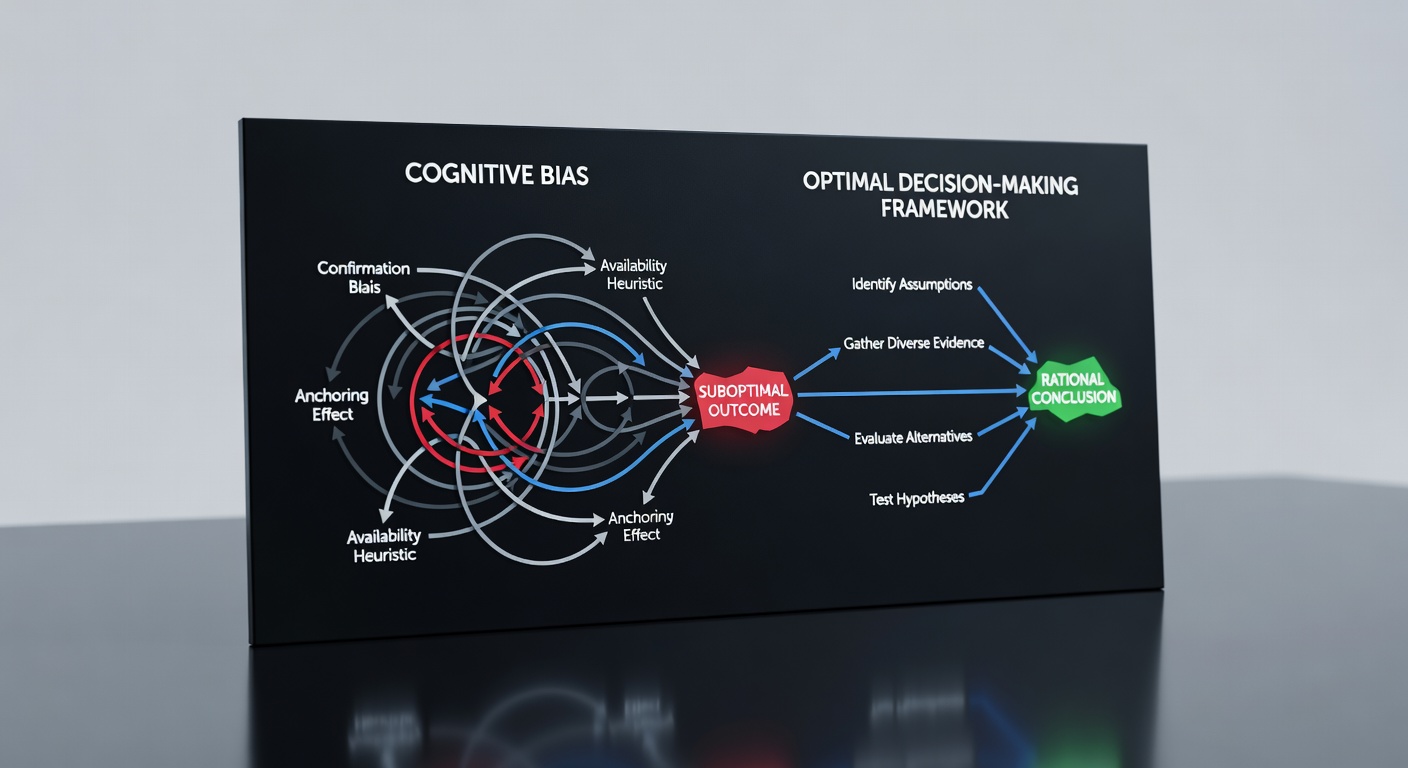
You sit at a blackjack table. You have fifteen. The dealer shows nine. Perfect basic strategy says hit. You stand. You lose. You knew you should have hit. You made a choice anyway.
Why do people deviate from optimal play when they know better? Several reasons overlap.
Outcome Bias
You remember the last time you hit a stiff hand and busted. The hand was vivid. The loss was painful. You remember this more clearly than the hands where hitting worked. Your memory is skewed toward bad outcomes.
The next time you face the same situation, the memory floods back. You do not want to feel that pain again. You stand even though hitting is correct. You are protecting yourself from recent pain, not from negative expected value.
Control Illusion
You feel that standing gives you control. If the dealer busts, you have won. You did this by standing. If you had hit and busted, the dealer would not have had a chance to bust. You feel responsible for outcomes that you actually had no control over.
This is irrational, but it is powerful. You stand because standing feels like you are doing something to protect yourself.
Bankroll Pressure
You are down to your last few hundred dollars. You cannot afford another loss. A correct play that risks busting feels dangerous. You stand because you cannot bear losing again. The correct expected value does not matter when you are running out of money.
This is actually rational self-preservation. If your bankroll is depleted, you have lost the ability to continue playing. Making plays that risk large losses in the near term is irrational even if they have positive expected value over thousands of hands.
Peer Pressure
The entire table stands on stiffs. You want to hit your fifteen. Everyone watches. The dealer is waiting. The expectation is clear. You stand instead of hitting because deviating from the table's expectation is uncomfortable.
This is the weakest reason. But it is real. Social pressure overrides mathematical knowledge.
Fatigue
You have been playing for six hours. Basic strategy requires constant calculation. Your brain is tired. You simplify. You remember fragments of strategy but not the complete rule. You make incorrect plays because you forgot the correct rule, not because you chose to.
This is why rest is important. Fatigue degrades decision-making. Playing tired means deviating from optimal play.
Correcting Deviation
The main correction is awareness. Recognize that you are playing from memory of past bad outcomes, not from expected value. Recognize that you cannot control the outcome. Recognize that bankroll pressure is affecting your decision-making.
Write down optimal strategy. Consult it during play. Eliminate the need to remember. Reduce the opportunity for deviation.
Play when well-rested. Fatigue is a major driver of deviation. If you are too tired to calculate, you are too tired to play optimally.
Accept that variance happens. A correct play that loses is still a correct play. A deviating play that wins is still a wrong play. The outcome does not validate the decision-making process.