

Mobile Sports Betting vs Desktop: Pros and Cons
The gentleman who still bets on a laptop with three windows open is dinosaur now. But he had a point. Mobile betting is the future, if you accept the trade-offs with equanimity.
Filed 23 April 2026 · 3 min read
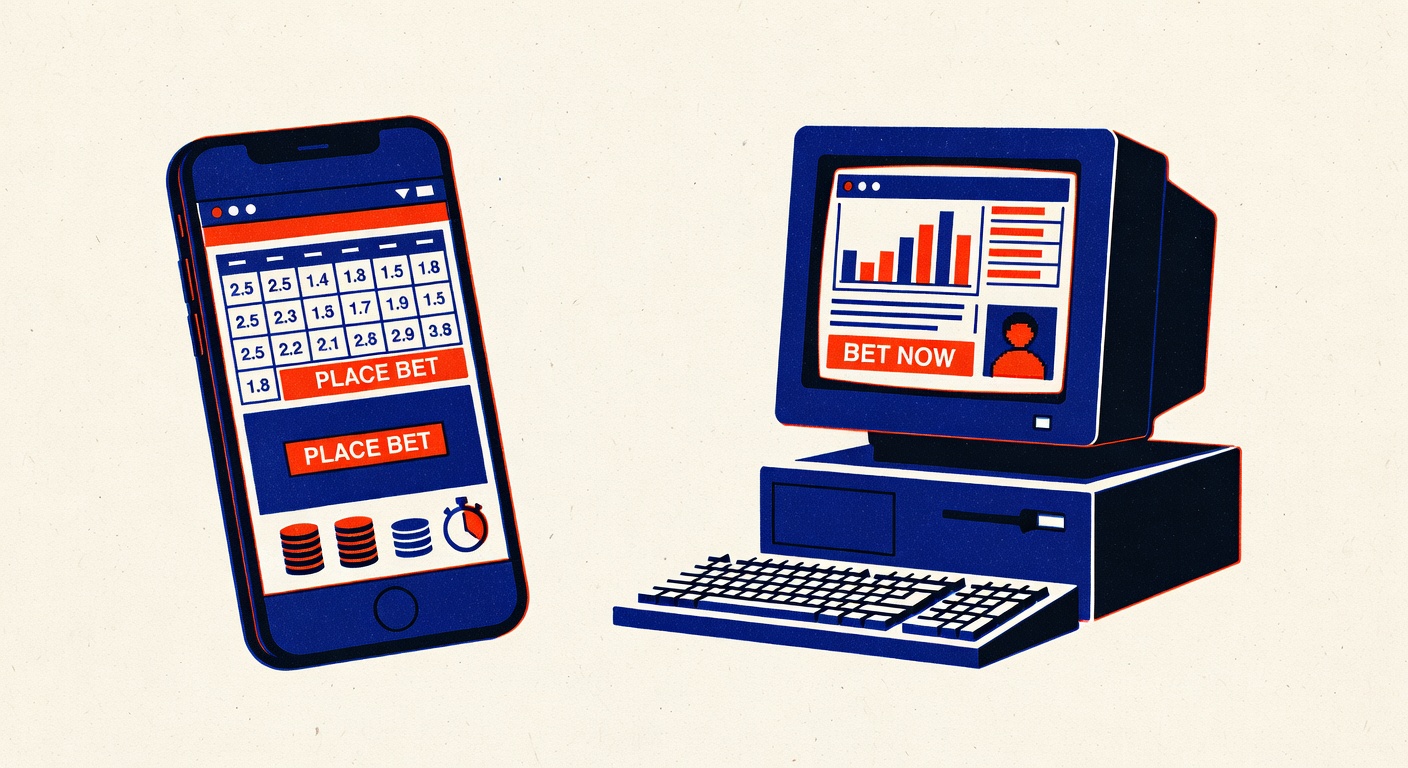
There remains something vaguely civilized about settling into a leather chair with a real screen and some whiskey, pulling up three sportsbooks side by side, and making a careful line of bets. This is how the serious money moved, once upon a time. The image persists. But mobile betting has won, and the question is no longer which you should use, but what exactly you are trading when you downsize from desktop to phone.
Mobile: The Speed Tax
The central argument for mobile betting is mobility itself. You are at the game. The fourth quarter has seventeen minutes left. A key player gets injured. The line moves. You bet. On mobile this takes seventeen seconds. You open an app. You tap the matchup. You adjust your stake. You confirm. Done. On desktop you are running to your laptop, waiting for the page to load, scrolling through three markets you do not care about, finding your line again. In the time it takes you to click confirm, three other bettors have already moved the number.
Bet365 and DraftKings both have designed their mobile interfaces for one-hand operation. A single tap gets you to your market. A single tap places your bet. This is intentional. The speed is the product. But speed has costs.
The Attention Problem
Desktop betting is friction. You sit down. You think. You open your models or your notes. You check three different sites for line movement. You calculate expected value. You decide. The physical act of moving to a desk creates a decision gate. Mobile bets are impulse bets. You feel something. You bet. You move on. Half an hour later you realize you wagered three hundred dollars on a game you had not checked since Tuesday.
There is no evil here. This is just the mathematics of friction. Remove the decision distance and you remove the decision quality. Sportsbooks know this. The app is designed to make betting easy, not betting well.
The Screen Real Estate Problem
On desktop you can see the full matchup. Team stats. Recent line movement. Multiple sportsbooks side by side. On mobile you get one line in a tall stack. You scroll down to see the prop bets. You scroll back up to confirm the team name. You lose context. You see the number but not the shape of the market. Pragmatic understanding requires sight lines. Mobile does not give you sight lines.
For casual bets this does not matter. For systematic play, it is crippling. A sharp at DraftKings using desktop can identify seven different profitable paths through an NFL card. The same player on mobile gets two before the screen reloads.
Comfort
A large monitor feels better to look at for three hours than a phone screen held at arm's length. Your eyes do not hurt. Your neck does not strain. You can lean back. You can have a notebook open beside the screen. Desktop is a comfortable working environment. Mobile is a constraint you tolerate.
The Real Trade-off: Control
Mobile wins on speed and location. Desktop wins on information density and systematic thinking. The question is what kind of bettor you are. If you are a casual wager-a-few-dollars player, mobile is superior in every way. If you are trying to beat the line with real money and real diligence, desktop is your only real choice.
Neither is wrong. The wrong choice is pretending they are equivalent. Pick the tool that matches the quality of decision you want to make.
Filed under: Mobile, Reviews, Sports Betting, Strategy