

Crypto Poker Deposits and Withdrawals: Why Blockchain Changed the Game
Forty years ago, a poker deposit meant a wire transfer or cash in an envelope.
Filed 26 August 2026 · 3 min read
Forty years ago, a poker deposit meant a wire transfer or cash in an envelope. The money moved slowly. It took three to five days to clear, and chargebacks were always possible. The poker room held your cash in a segregated account and managed the accounting on their own ledger. You did not own anything on the blockchain because there was no blockchain. You owned a promise.
Today, if you deposit Bitcoin or Ethereum to a poker site, the transaction settles in minutes. You can verify the transaction on the public ledger yourself. This is not a philosophical difference; it changes the entire risk model.
The Technology Underneath
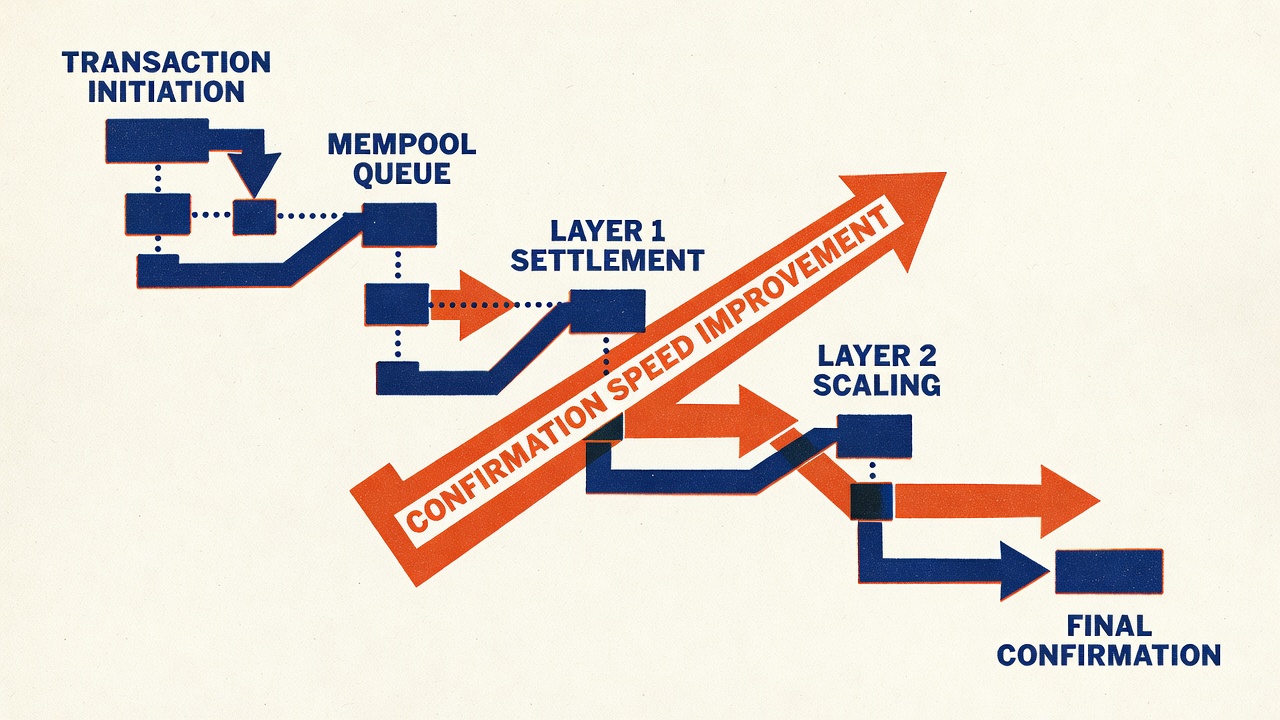
When you send Bitcoin to a poker platform, the transaction gets broadcast to the network, picked up by miners, included in a block, and confirmed. After six confirmations, the transaction is final. Reversible is no longer. The poker site cannot claim the funds never arrived. The public ledger proves otherwise. This is why crypto poker is popular among players in jurisdictions where the legal status of the poker site is ambiguous. If the government shuts down the platform tomorrow, you can prove you owned assets on the blockchain.
Ethereum and other smart-contract chains take this further. A poker site can write a contract that automatically locks your deposit in an escrow account and only releases it to the site's operator when you request a withdrawal. The code is public. You can read it yourself. A traditional poker room asks you to trust their accounting. A crypto poker site lets you trust cryptography instead.
Withdrawals work the same way in reverse. You request a withdrawal, the site sends the coins to your wallet address, and the blockchain confirms the transfer. No bank intermediaries, no holds, no waiting. Within the time it takes a block to mine (roughly 10 minutes for Bitcoin, 12 seconds for Ethereum), your coins are in your account.
The difference between a crypto withdrawal and a traditional bank withdrawal is the difference between a promise and a fact. One requires you to trust an institution. The other is self-verifying.
The catch: self-custody means self-security. If you lose your private key, the money is gone. There is no call center to reset your password. There is no insurance. This is why many crypto poker sites still hold your coins in a corporate wallet after you withdraw. They offer convenience, but you sacrifice the main advantage of crypto: true ownership.
Practical Differences at the Tables
A traditional poker site can hold your funds at a licensed bank, which gives you legal recourse if the site goes under. A crypto poker site holds your funds on the blockchain, which is irreversible but also uncensorable. If you are in a country where poker is restricted, crypto may be your only option. If you are in a regulated jurisdiction, traditional banking offers stronger consumer protections.
Fees matter too. A Bitcoin withdrawal costs a small miner fee, usually under $5 if you are not in a hurry. A bank wire costs between $15 and $50 and takes two to three days. Stablecoin transfers on Ethereum Layer 2 cost pennies and settle in minutes. The poker site's choice of blockchain reflects its priority: speed, cost, or decentralization.
Many successful poker sites now offer both options. You can deposit via Bitcoin if you want the censorship resistance, or via credit card if you want the chargebacks protection. The best sites let you choose based on your own risk tolerance.
The underlying truth is this: crypto did not invent fast, cheap payments. It made them self-verifying. You can now know for certain that your money reached the poker room, and the poker room knows for certain that you received their payout. This removes an entire category of disputes. No more "the wire never arrived" or "we never received your withdrawal request." The blockchain is the proof.
Filed under: Poker, Crypto Gambling, Payments