

How to Choose a Trustworthy Online Sportsbook
Most sportsbooks look the same. They're not. Here's what actually matters when money is on the line.
Filed 20 August 2026 · 4 min read
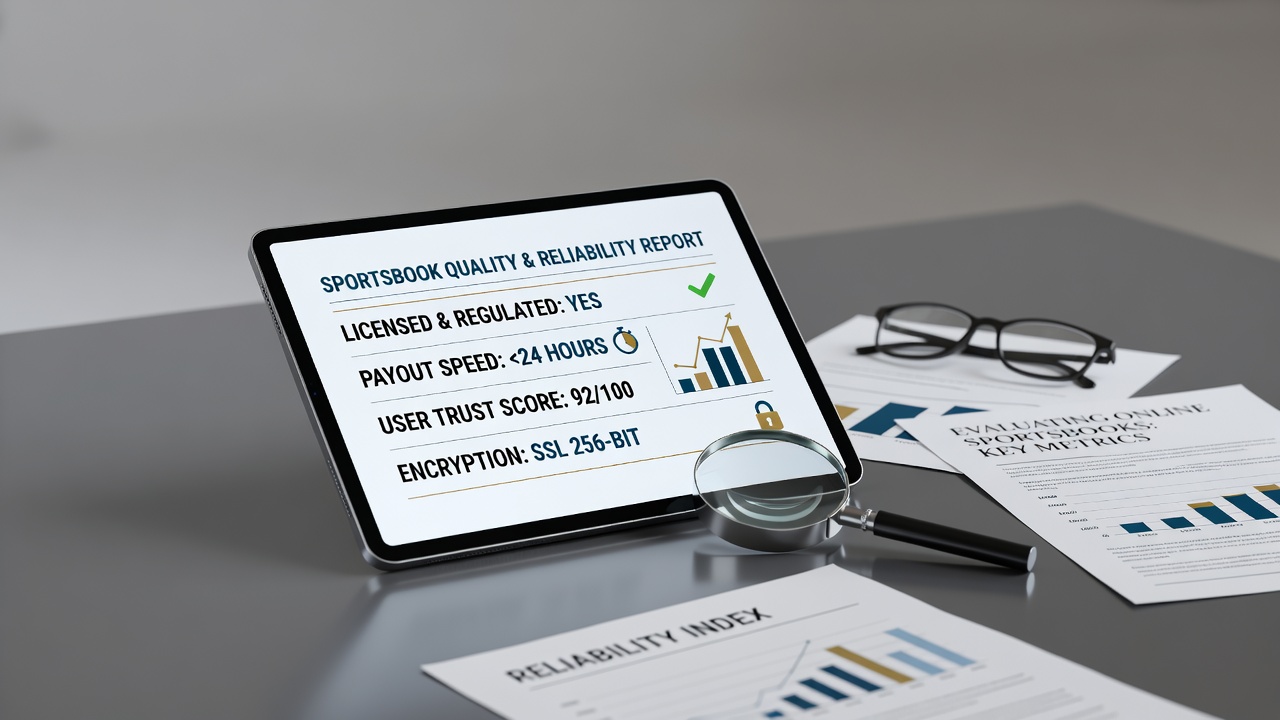
You're about to hand a company thousands of dollars. Not all at once. Over time. But eventually, if you're a regular bettor, your balance sheet is tied to their competence and ethics.
So pick carefully. Here's what matters.
Licensing Is Not Optional
This is where people stumble. They see a sportsbook advertised on TV and assume it's regulated. Not all televised sportsbooks are equally regulated.
DraftKings is licensed in multiple US states and the UK. FanDuel is licensed in multiple states. Bet365 is licensed in the UK and operates in multiple other jurisdictions.
Unlicensed books operating out of Caribbean jurisdictions exist (Curaçao, Antigua). They may be legal in some jurisdictions but they're not regulated by US state commissions. If there's a dispute, you have no recourse. The company has no compliance obligation to anyone but itself.
Check the footer of the website. Licensed operators publish their license number. UKGC license. Malta Gaming Authority license. New Jersey Division of Gaming Enforcement license. If you don't see it, that's a signal.
"Licensed in Curaçao" means "licensed by an entity with minimal oversight." It's not the same as "licensed in New Jersey." The regulatory gap is enormous.
Payout Speed Matters
A sportsbook that pays fast is a sportsbook that's solvent. A sportsbook that delays payouts is a sportsbook that's managing cash flow risk.
DraftKings and FanDuel process payouts in 24 to 72 hours. Some smaller books take 7 to 10 days. Some take longer.
The delay isn't always malicious. But it's a signal. A well-capitalized operator doesn't need to hold your money. An undercapitalized operator does.
I once knew someone who had a five-figure payout pending for six weeks. The book claimed technical issues. Technical issues that lasted six weeks is fraud by another name.
Reputation Is Measurable
Check online reviews, but filter for signal.
Many reviews are fake. Both positive (from the operator) and negative (from competitors). Look for specific complaints. "Bet got voided without explanation." "Money took two months to show up." These are specific.
Ignore "odds are bad" or "I lost money." Bad luck is not fraud.
The Better Business Bureau tracks complaints. Check the complaint ratio and whether the company responds. A high complaint volume is bad. No response is worse.
Tweet at the company with a problem. See if they respond in 24 hours. Public companies with large operations respond quickly. Sketchy operators ghost you.
House Rules Are Hidden in the Details
Read the fine print. Specifically the section on account suspension and void bets.
Some sportsbooks reserve the right to void bets for multiple reasons:
- If they made a mistake on the odds
- If the game gets postponed
- If a player is ruled ineligible
- If the bet violates terms of service
Legitimate reasons exist. But some books have voided bets that should have paid because of aggressive interpretation of terms. "Player did not meet wagering requirements" becomes "any bet on the account is void."
The best books have clear language and limited reasons for voiding. Bad books have vague language and broad authority.
Customer Service Is The Canary
Call the customer service line. Don't ask a question that requires looking something up. Ask something that requires judgment.
Example: "I see my account got limited. Can you explain why?"
A good operator's customer service can answer in under 5 minutes. They know the reason. They explain it clearly. They may not change the decision, but they explain it.
A bad operator puts you on hold for 20 minutes and then tells you "we can't discuss account decisions."
The way they treat you when you're confused is how they'll treat you when there's a large dispute.
Withdrawal Limits Are A Red Flag
Watch for books that set daily withdrawal limits without reason. $500 per day. $1,000 per week.
This isn't protection. This is the operator making sure you keep money in your account if you have a winning streak.
Legitimate limits exist for regulatory reasons (anti-money-laundering thresholds). But a $500 daily limit on a high roller's account is not regulation. That's management of cash flow.
The Real Test
Bet small first. $20. Then $100. See how fast the money comes back. See how clear the process is. See if the odds match their website.
If everything is smooth at small volume, scale to medium. If medium is smooth, you're probably fine.
If anything is slow or opaque, take your money elsewhere. There are dozens of sportsbooks. The one that makes your money disappear for three days is not the one to use for serious amounts.
License, speed, reputation, transparency, and customer service. Those are the five metrics. Any book weak on even one of them is a candidate to avoid.
Filed under: Guides, Security, Sports Betting, Tips & Tricks