

Charles Wells and the Roulette Table: Luck, Belief, and What Chance Really Is
In the summer of 1891, an Englishman named Charles Wells arrived at the Casino de Monte-Carlo with modest means and left three days later with a fortune.
Filed 7 August 2026 · 4 min read
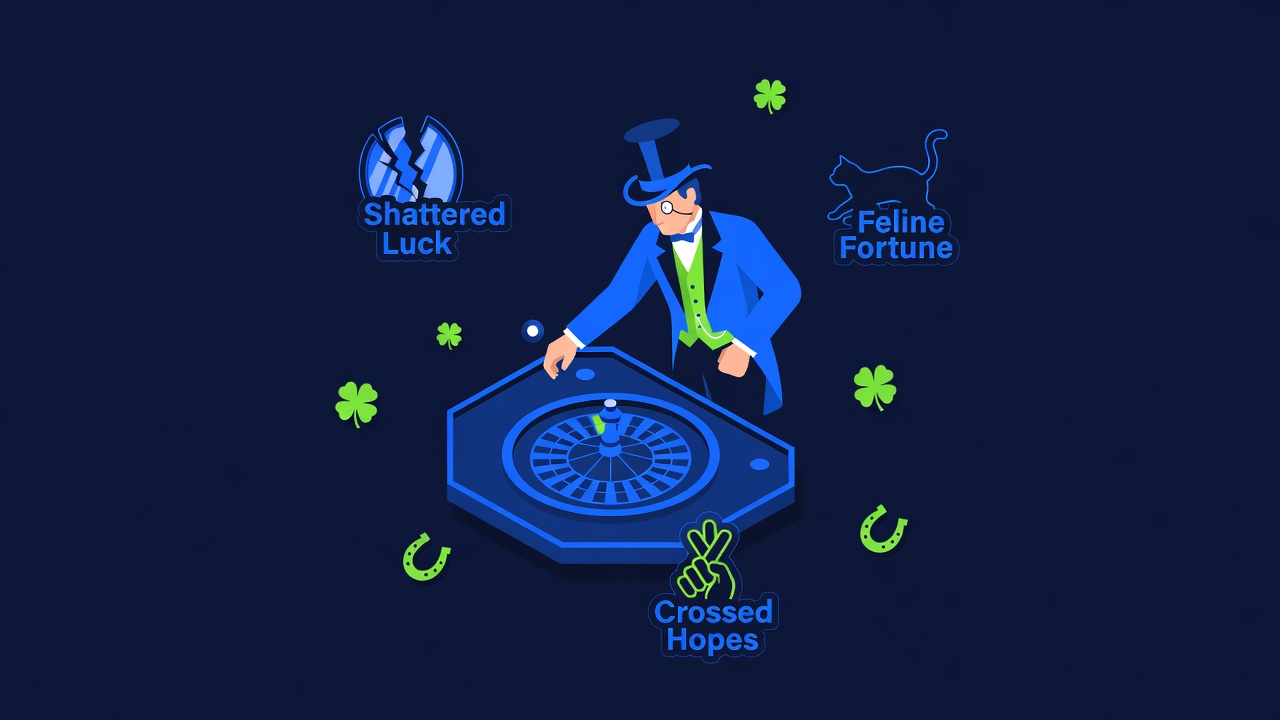
In the summer of 1891, an Englishman named Charles Wells arrived at the Casino de Monte-Carlo with modest means and left three days later with a fortune. He played roulette obsessively, betting on black and red, on single numbers, on groups of numbers in patterns that seemed to call out to him. He won, and won again, and the other players watched in astonishment as his small stake became larger, then enormous.
By the time Wells departed, he had broken the bank at Monte-Carlo. He had won more money than the casino could pay in a single day. They had to close the roulette tables. This is not metaphor; this is the event that occurred, witnessed by hundreds, recorded in the casino's ledgers.
Why does this story endure? Because it answered a question that everyone who gambles secretly asks: is it possible to beat chance itself? Wells was not the smartest man in the room. He did not carry a hidden system or a mathematical insight unknown to the casino. He simply played, and chance favored him. For those three days, he was blessed by fortune in a way that violated no rules and injured no one. He simply won.
What Chance Reveals About the Bettor
One might ask: what is the difference between luck and probability? If I flip a coin and predict heads ten times and all ten come up heads, have I demonstrated skill, or has chance simply aligned with my prediction? The casino would say chance. The person who collected the winnings might say something else.
Wells believed he could read the roulette wheel. Not through mechanical defect, but through some intuition about which numbers would fall. This is, in the language of modern psychology, a belief in the illusion of control. Most people who gamble hold some version of this belief. Some are more conscious of it than others. Wells was not embarrassed about his conviction. He gambled as if the wheel was speaking to him, and for three days, the wheel seemed to listen.
But here is the harder question: what does it mean that Wells' belief matched reality for those three days? If belief does not determine outcome, then why did his belief produce wealth? The answer is that outcomes are independent of belief. Wells won because the roulette wheel is a random device, and random devices produce unexpected runs. He lost later (he would gamble away much of his winnings within months) for the same reason. The wheel does not care what he believes.
Yet the story we remember is the one where he won. This is how humans make sense of chance: we remember the hits and forget the misses. We construct narratives around the outcomes that confirm our beliefs about how the world works.
A man who breaks the bank at Monte-Carlo is remembered as lucky. A man who loses his fortune at the same table the next month is remembered as foolish. The only difference is the direction of the cards.
Wells was not the first person to experience a short-term winning streak, and he was not the last. But he was the first to become famous for it. Fame changed the meaning. His name became attached not to random variation but to the idea that chance can be beaten, that applied intuition can overcome mathematical expectation. This is false. But it is a story that sells tickets.
The Question That Lingers
One might probe further: if we cannot beat chance through skill, why do we gamble at all? The answer seems to be that we do not gamble to beat chance. We gamble to participate in chance. The outcome is secondary to the participation. We want to feel the weight of a decision made under uncertainty, the tension of waiting for a result we do not control, the relief or disappointment that follows. These are human experiences, and they are valuable to us apart from money.
Wells experienced something genuine at Monte-Carlo, even though his belief that he could predict the wheel was false. He experienced the thrill of winning, the sense that he had matched his intuition against the cosmos and prevailed, at least for a moment. That this was a product of probability rather than insight does not diminish the experience.
But it changes the question from "Can I beat the wheel?" to "What am I willing to pay for the experience of trying?" Wells paid with much of his life. He chased the feeling he had at Monte-Carlo for decades, losing fortunes in the process. The breaking of the bank was not the beginning of his story; it was the moment that trapped him in the belief that he could repeat it.
We are all Charles Wells in waiting. The question is whether we understand the cost of the answer.