

How Bonus Abuse Detection Typically Works
A gentleman came to the casino with a system. He had found a loophole in the bonus terms. He deposited, took the bonus, played in a way that he believed exempted him from the rules. It did not.
Filed 3 May 2026 · 3 min read
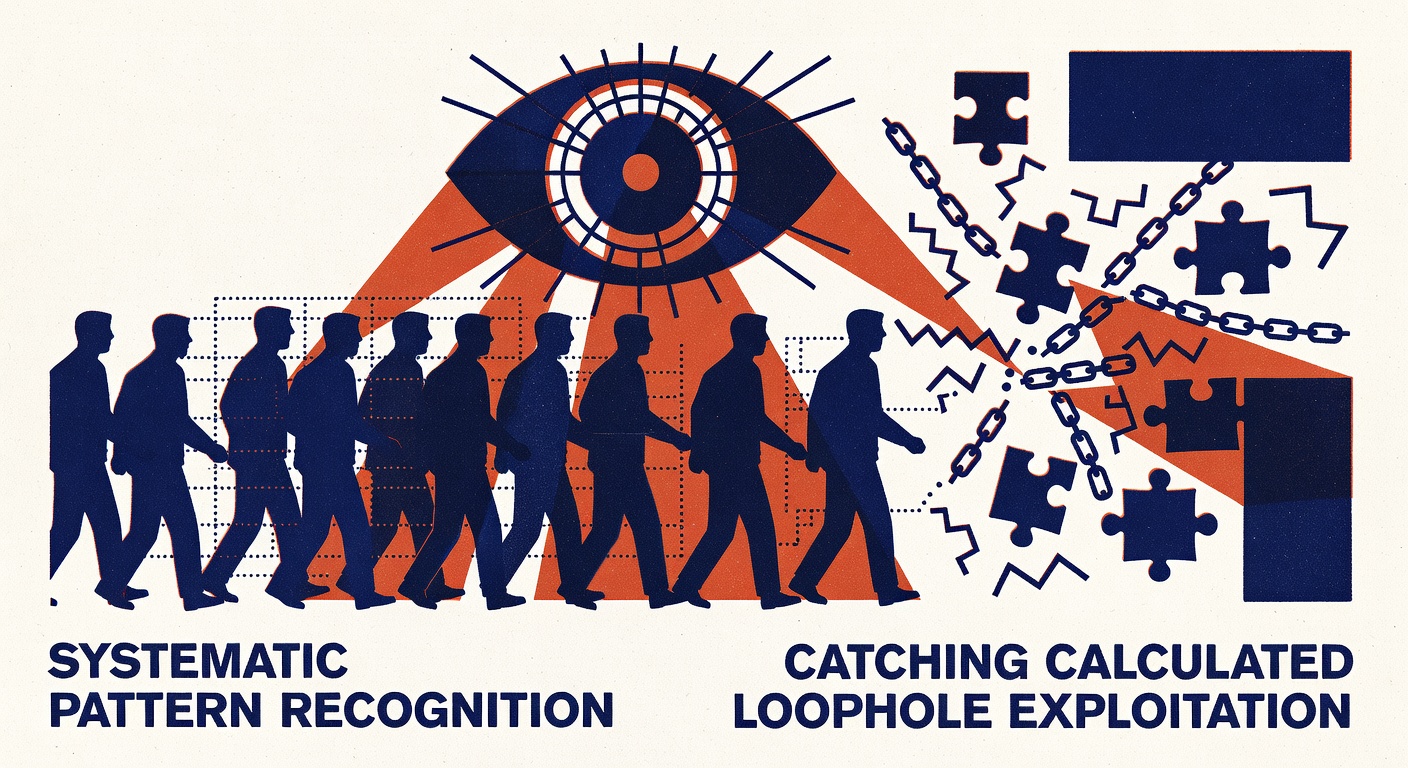
I have watched very rich men enter rooms where the stakes are real money and the time is running. A industrialist from Hamburg came to the high-limit room with a particular look. The look of someone who believed he had found something the casino had not. He had found a bonus that, according to his reading of the terms, allowed him to withdraw money without playing it through.
The casino lets this man play. The casino watches. The casino allows the game to proceed, the money to move, the outcome to settle. Then, quietly, the casino takes the money back. The man's account is emptied. The transaction is recorded as a bonus abuse violation.
This is not robbery. The casino has the legal right to define what constitutes acceptable play. If you violate those terms, they can keep the money. Most players never learn what they violated. They assume the casino made an error. Some of them hire lawyers. The lawyers read the terms and realize the player violated them. The case is closed.
The Detection System
Modern casinos use software that tracks every action. Your betting pattern is analyzed. Your win rate is compared to statistical models. The software asks: is this play consistent with the bonus offer, or is this someone trying to extract value in an unintended way?
A bonus that offers 100 dollars free on a 100-dollar deposit has terms. You must play through the bonus 30 times. Some games count toward the playthrough at 100 percent. Some count at 50 percent. Some do not count at all. A player who bets exclusively on the games that do not count toward playthrough is executing a strategy. A strategy is fine. A strategy that violates the terms is not.
The casino's software measures everything. Your average bet size. The games you select. The duration of your play. The time of day you play. A deviation from the expected pattern triggers an alert.
The Discretion Problem
The casino has complete discretion in determining what constitutes abuse. If the terms are ambiguous, the casino decides. If your interpretation differs from the casino's interpretation, the casino wins. This is not a legal system. This is a business deciding what it will and will not allow.
A man from Bulgaria came with a reading of the bonus terms different from the casino's. He played for three days. He built a profit. He asked for a withdrawal. The casino denied it. They said his play pattern constituted abuse.
The man asked what specific abuse occurred. The casino said his average bet size was too small. The man's average bet was two dollars. The playthrough requirement was thirty times the bonus, or three thousand dollars. His total wagering was four thousand dollars. He had met the requirement. The casino's software detected an anomaly and flagged his account.
The man could not withdraw. He could not even contact the casino's decision-makers. He was routed to customer service, which had no authority. He gave up. The casino kept the money.
The Asymmetry
The casino designs the bonus. The casino writes the terms. The casino interprets the terms. The casino enforces the terms. This is not a fair structure. It is deliberately unfair in the casino's favor. The player has one option: accept it or do not play.
Most players do not know this. They see a bonus and think they have found an opportunity. The bonus is an opportunity, but not the kind they imagine. The opportunity is for the casino to learn your betting patterns and decide whether you are worth keeping or exploiting.